SPECIALIST GUIDE / 02
Cracks are observations. Treatment starts with understanding their behaviour.
Width can be useful, but it is only one part of the picture. Pattern, movement, moisture and the surrounding concrete all influence what should happen next.
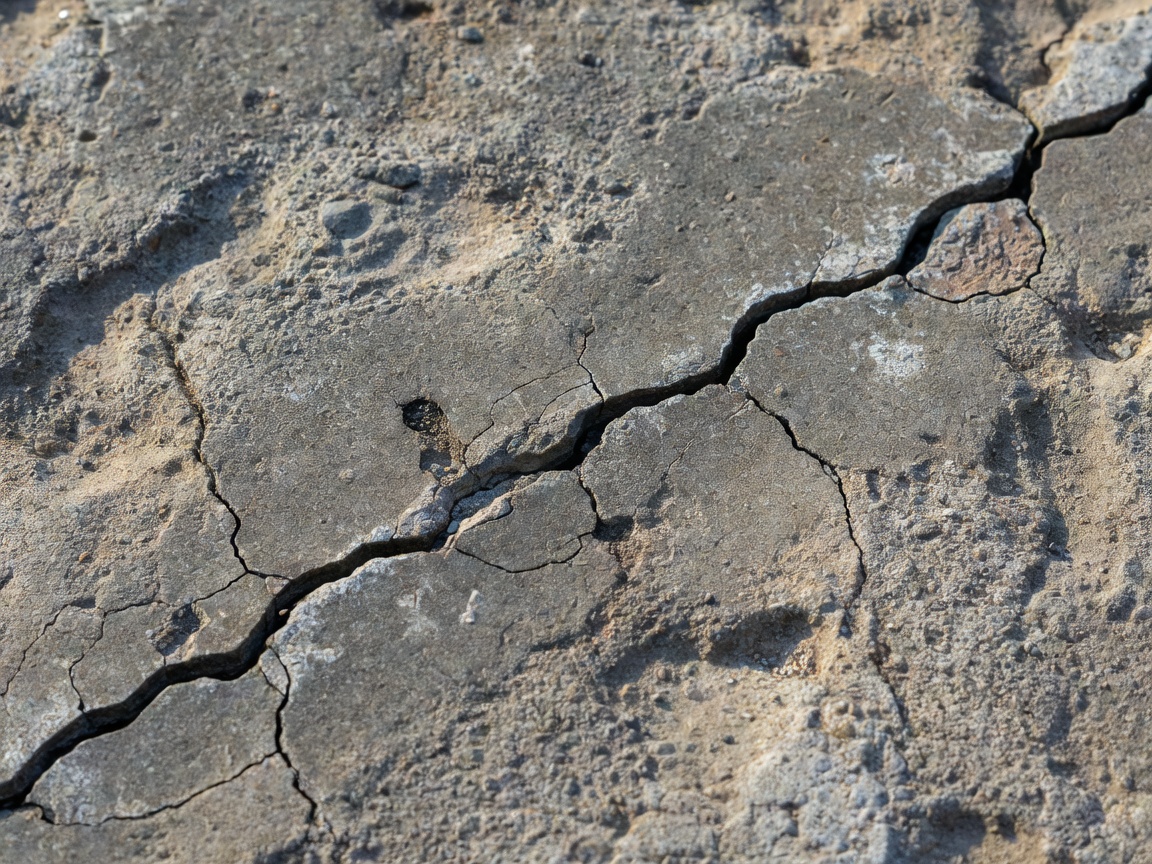
A crack in concrete can be visually striking, but a photograph alone cannot establish its cause. Cracks may relate to drying shrinkage, restraint, thermal movement, settlement, loading, moisture or a combination of conditions. Some remain stable; others change with seasons, use or water exposure. The useful first question is not “which filler should be used?” but “what is this crack doing, and what does the repair need to achieve?”
Start by recording the pattern and location. Is the crack isolated, repeated, diagonal, stepped, map-like or concentrated around an opening, joint, corner or reinforcement line? Does it pass through a finish or appear to continue into the concrete? Note staining, dampness, rust-coloured marks, edge damage and any change since earlier observations. These details help a qualified professional decide whether further assessment is appropriate.
Crack width is one observation among several. A fine surface crack in a drying finish is not automatically equivalent to a wider crack that appears to move or admit water. Conversely, a narrow crack in a sensitive location should not be dismissed simply because it looks small. The significance depends on the element, environment, use and consequences of deterioration.
Treatment categories are best understood by objective. Some work aims to improve appearance by reducing the visibility of stable surface cracking. Some aims to manage water entry or protect the surface. Other situations may require a system designed around movement, or a broader repair where the surrounding concrete has deteriorated. Structural suitability should be determined by qualified professionals; this page is not a repair instruction.
Movement deserves particular attention. A rigid treatment may be unsuitable where a joint or crack is expected to open and close. Moisture can also change the choice of preparation and material, while salts or corrosion indicators may point to a wider condition issue. Treating the line without considering the water path can produce a tidy short-term appearance without addressing the reason it keeps returning.
Monitoring can be useful when the condition is uncertain. Dated photographs, marked locations and consistent observations can show whether the pattern is changing. Monitoring does not replace professional assessment where safety, structural performance or significant deterioration is a concern. Seek project-specific advice for cracks in structural elements, cracks accompanied by displacement, exposed reinforcement, persistent water ingress or rapidly changing damage.
A clear brief should describe the desired result: visual reduction, moisture management, movement accommodation, protection or investigation. It should also explain access, surrounding finishes and whether the area must remain operational. That context is more valuable than selecting a generic repair product from a photograph.
Compare the treatment conversation
| Observation | Possible objective | What to know |
|---|---|---|
| Fine, stable-looking surface cracking | Appearance and surface protection | Cause and substrate condition still need consideration. |
| Crack with moisture or staining | Understand and manage water exposure | Closing the visible line may not resolve the water path. |
| Crack showing movement or displacement | Project-specific assessment | Treatment depends on the element, movement and risk. |
Good for
Early discussions about visible cracking in walls, floors, façades and concrete elements.
What to know
Do not diagnose structural cause from a photograph or use this guide as a repair method.