SPECIALIST GUIDE / 05
Maintenance turns isolated observations into useful knowledge.
Routine visual observation is valuable, but it is not the same as a professional structural assessment. Good records help you know when the second is needed.
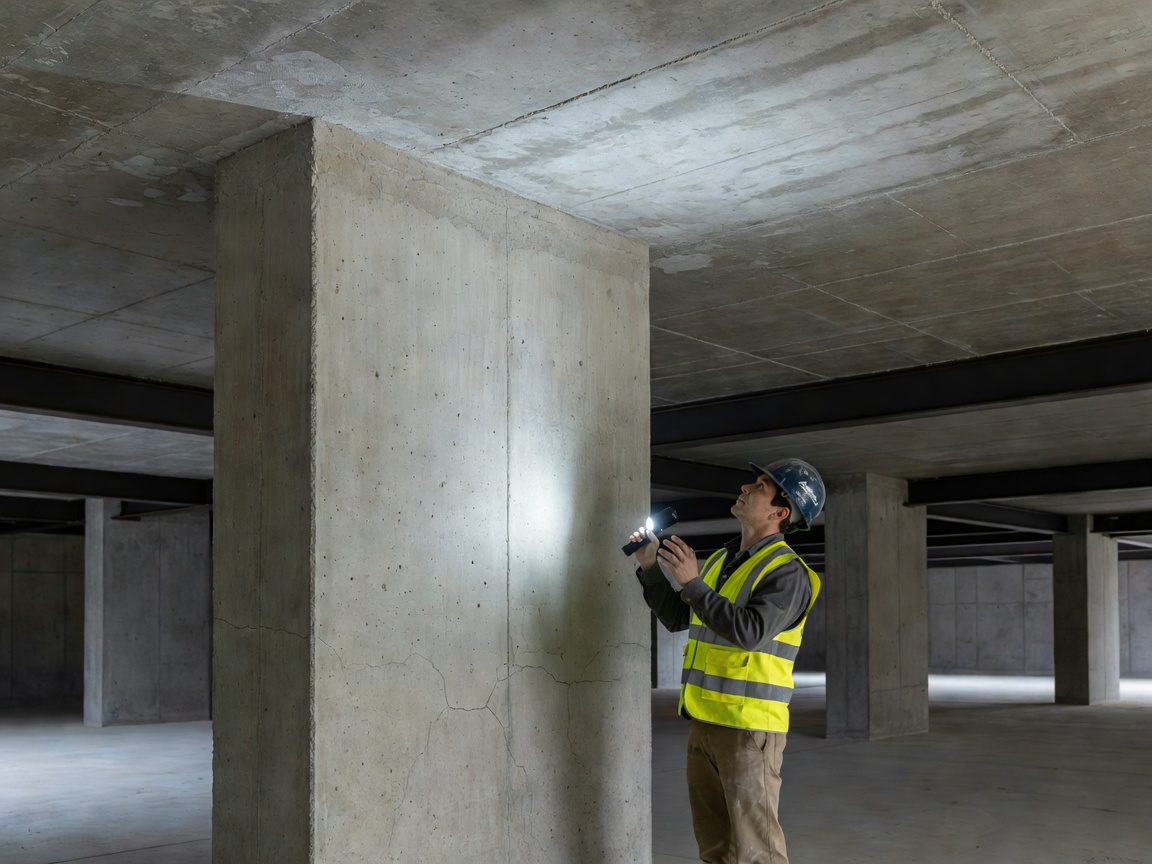
Concrete maintenance is less about constantly intervening and more about noticing change early. A regular visual walk-through can identify cracks, staining, impact damage, worn edges, exposed reinforcement, damp patches and drainage problems. It can also show whether a previous repair or coating is changing. These observations are useful information, not a diagnosis.
Record location and date consistently. Use photographs from similar positions, a simple plan or asset reference and plain descriptions of what can be seen. Note whether the condition is new, stable or changing, and whether it follows rain, cleaning, seasonal temperature or a change in building use. Avoid scraping, drilling or disturbing a defect as part of a routine check.
Cracks deserve attention when they are changing, associated with displacement, accompanied by moisture or concentrated around structural elements. Surface damage may expose aggregate or reinforcement. Rust-coloured staining can be an indicator of corrosion-related conditions, although appearance alone cannot establish the extent. Persistent dampness may relate to drainage, joints, leaks or condensation.
Drainage is often an important part of the maintenance picture. Check whether water can leave the area, whether outlets are blocked and whether joints or interfaces are directing water toward concrete. Environmental exposure matters too: salts, industrial atmospheres, repeated wetting and drying, impact and abrasion can change the pace and character of deterioration.
Keep a maintenance record that includes previous repairs, coatings, inspections, access arrangements and any advice received. This helps future reviewers understand what has changed and prevents each visit from starting with no history. Records are particularly useful where several teams manage different parts of a building.
Routine observation has clear limits. A professional structural assessment may be appropriate where damage is extensive, rapidly changing, near reinforcement, associated with movement, affecting a structural element or creating concern about safe use. Qualified professionals should determine structural suitability and any necessary investigation. Do not treat a maintenance checklist as permission to carry out hazardous work, remove concrete or work at height.
Maintenance planning should also identify communication routes. Decide who records observations, who reviews them, what conditions trigger escalation and how access can be arranged safely. Small, well-described observations often make later repair planning more efficient.
Practical maintenance checklist
- Walk accessible areas at a sensible, documented frequency.
- Photograph cracks, staining, spalling, exposed reinforcement and coating changes.
- Check drainage, joints, leaks, dampness and areas of repeated wetting.
- Record changes without disturbing or testing the concrete yourself.
- Review previous repair and coating records.
- Seek qualified assessment for changing, extensive or structurally relevant damage.
Good for
Facilities teams, building owners and managers creating a practical observation record.
What to know
Routine observation supports decisions; it does not replace a professional structural assessment.