SPECIALIST GUIDE / 03
Surface restoration is where condition and appearance meet.
A good restoration brief considers what has deteriorated, what must perform differently and how the repaired area should sit beside the original concrete.
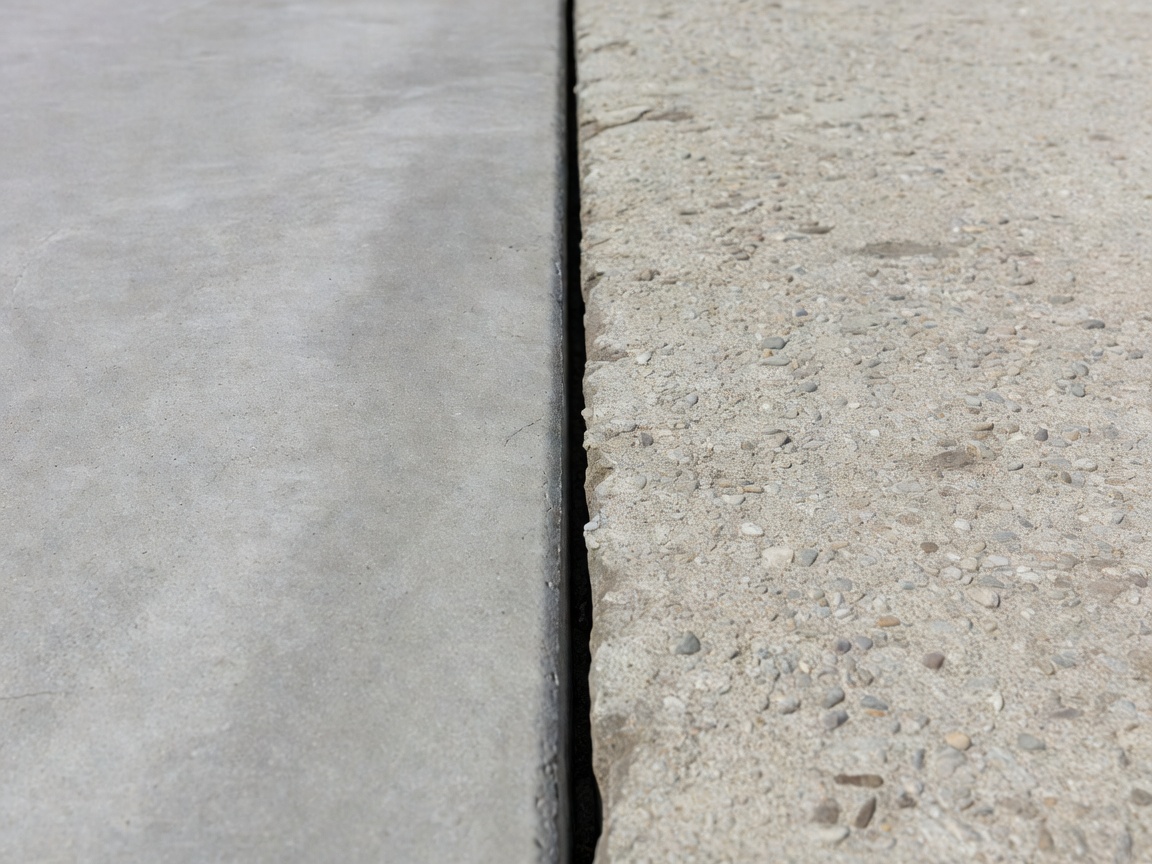
Concrete surface restoration can mean several different things. It may be a local repair to a damaged arris, the removal of loose material, treatment of staining, reinstatement of a worn floor or a broader rehabilitation of a façade. The correct scope depends on the condition and the intended outcome. A cosmetic improvement is not the same as work intended to address water exposure, deterioration or safe use.
Begin by separating visible symptoms. Spalling is the loss or breaking away of concrete from the surface. Delamination describes a separation below the face, which may not be obvious until the area is investigated. Staining can come from moisture, corrosion-related deposits, dirt or adjacent materials. Worn concrete may have lost texture or become difficult to clean. Exposed aggregate may be an intentional finish, a result of wear or a sign that the surface has deteriorated.
Preparation is central to the result. Loose or unsound material, contaminants, laitance and incompatible previous coatings can affect adhesion and appearance. The preparation approach must suit the substrate and the surroundings. Dust, vibration, water and access should be considered, especially in occupied buildings or near sensitive finishes.
Appearance consistency deserves an early conversation. New material rarely looks identical to aged concrete immediately after application. Aggregate size, colour, texture, curing, lighting and weathering all influence the result. Sometimes the appropriate objective is a discreet local repair; sometimes a broader treatment is needed to create a coherent field. Neither approach should be promised without viewing the condition and understanding the client’s tolerance for variation.
Damaged edges are especially exposed because they receive impact, water and repeated cleaning. Worn floors bring different concerns: slip behaviour, traffic, cleaning routines and transitions to adjacent areas. Façades and architectural walls may prioritise colour and texture, while plant rooms or service areas may prioritise cleanability and moisture management.
Restoration may therefore range from a local intervention to broader rehabilitation. The choice should reflect condition, risk, access, operational constraints and the desired post-repair appearance. Where damage is near reinforcement, accompanied by corrosion indicators or associated with structural elements, qualified professionals should determine the required assessment and scope.
After repair, record what was done and how the area should be observed. A simple maintenance note can identify cleaning limits, water issues, future inspection points and changes worth reporting. Restoration works best when the repaired surface has a place in a longer-term care plan.
Practical comparison
| Restoration aim | Typical planning emphasis | What to know |
|---|---|---|
| Local edge or patch repair | Soundness, profile and visual blending | Small areas can be visually demanding. |
| Worn floor or working surface | Use, cleaning, traffic and surface performance | Operational requirements shape preparation and finish. |
| Broader architectural rehabilitation | Consistency, access and phased work | Appearance goals should be agreed before work begins. |
Planning checklist
- Identify spalling, delamination, staining, wear and damaged edges separately.
- Record adjacent finishes, colour, texture and exposure.
- Define whether the goal is cosmetic, functional, protective or investigative.
- Consider dust, noise, water, access and occupied areas.
- Agree how much variation from existing concrete is acceptable.
Good for
Architectural concrete, floors, façades, edges, exposed aggregate and weathered surfaces.
What to know
Post-repair appearance depends on substrate, preparation, material, curing and surrounding weathering.