SPECIALIST GUIDE / 04
Protection should suit the concrete, the exposure and the life around it.
A coating is part of a system. Substrate condition, preparation, compatibility, appearance and future maintenance all matter as much as the chosen category.
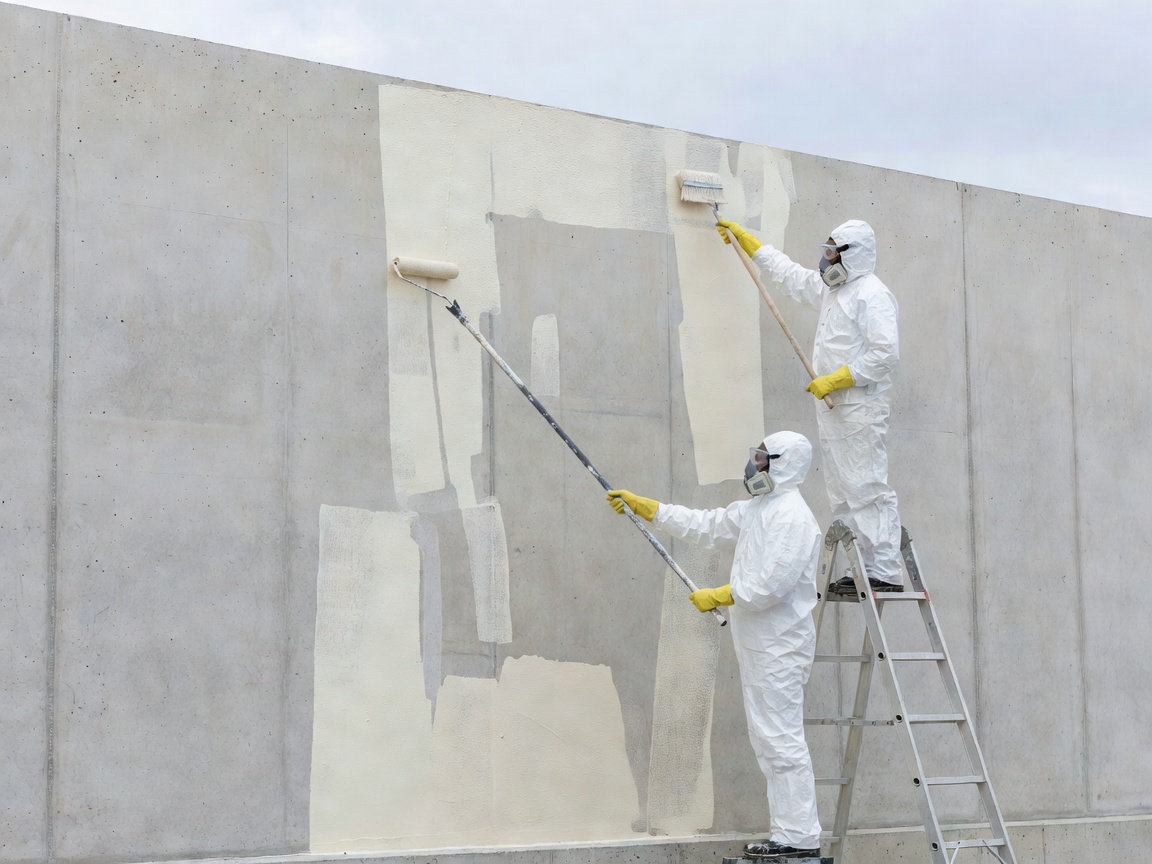
Protective coatings can help manage exposure, improve cleanability, change appearance or provide a barrier between concrete and its environment. They are not universal remedies. Selection depends on the substrate condition, moisture, intended use, environmental conditions and the performance required from the finished surface.
Start with the concrete rather than the colour chart. Existing cracks, laitance, contamination, salts, weak surface material, dampness and previous coatings can influence adhesion and appearance. If the substrate is moving, deteriorating or carrying moisture, a coating may conceal the symptom without resolving the underlying condition. Preparation should be planned around the actual substrate and surrounding building operations.
Exposure is equally important. Interior walls, plant rooms, car parks, external façades, wet areas and wash-down zones do not experience the same conditions. Ultraviolet light, temperature change, abrasion, cleaning chemicals, standing water and salts may all affect a system. Requirements also vary by building type, location and jurisdiction, so project-specific advice may be necessary.
Coating categories can be discussed by purpose. Film-forming systems create a continuous layer and may offer a strong visual change or cleanable finish. Penetrating treatments interact more subtly with the surface and may be selected where maintaining texture matters. Cementitious or mineral-based finishes may suit certain restoration contexts. These broad descriptions do not establish suitability, product performance or service life.
Compatibility deserves careful attention. A new layer must work with the concrete and any existing treatment. Trapped moisture, incompatible movement, poor edge detailing or unsuitable preparation can lead to blistering, peeling or patchy appearance. Test areas can help review texture and colour, but they do not replace a full project assessment.
Indoor and outdoor applications also differ. Indoor work may involve ventilation, occupancy, odour and cleaning requirements. Outdoor work must account for weather windows, runoff, sunlight and seasonal conditions. Access, masking and protection of adjacent stone, metal, glass and planting should be included in the plan.
Maintenance and recoating should be considered before application. Ask how the surface will be cleaned, what early changes should be monitored and how future repairs will be integrated. Avoid relying on an unverified service-life promise; performance depends on the substrate, exposure, preparation, application and care.
Compare coating conversations
| Coating direction | Potential reason to consider it | What to know |
|---|---|---|
| Film-forming finish | Visual change or cleanable continuous surface | Moisture, adhesion, movement and preparation are critical. |
| Penetrating treatment | Subtle surface intervention | It may not provide the same appearance or barrier as a film. |
| Mineral or cementitious finish | Restoration-led appearance or substrate compatibility | Context, curing and surrounding finish affect the result. |
Selection checklist
- What exposure and cleaning conditions will the surface experience?
- Is the concrete dry, sound and compatible with the proposed system?
- What appearance, texture and reflectance are wanted?
- How will adjacent materials and occupied areas be protected?
- What maintenance and future recoating decisions should be recorded?
Good for
External concrete, plant areas, commercial interiors, service spaces and restoration-led finishes.
What to know
No coating category is suitable for every substrate or exposure, and no service life should be assumed without evidence.